The 4th International Conference on Data Security and Privacy Protection Nanjing, China · 16–18 October 2026
About DSPP 2026
The International Conference on Data Security and Privacy Protection (DSPP) is an established annual
international conference on data security and privacy protection. DSPP 2026 will
be held in Nanjing, from October 16th to October 18th, 2026. DSPP 2026 promotes and stimulates discussion
on the latest theory, algorithms, applications, and emerging topics on data security and privacy
protection. DSPP 2026 encourages the cross-fertilization of ideas and provides a platform for
researchers, professionals, and students from all around the world to discuss and present their
findings.
Important Dates
Paper Submission Due
April 15, 2026 (1st Round )
June 30, 2026(2nd Round)
Author Notification
May 31, 2026(1st Round )
August 12, 2026(2nd Round )
Camera-ready Paper Due
August 21, 2026
Author Registration Due
September 15, 2026
Conference Date
October 16-18, 2026
Sponsors
Conference Topics
The main objectives of this conference with regard to data security and privacy protection are as
follows:
Encouraging the study, improvement of the practice, advancement of knowledge, and application of applied research.
The International Conference on Data Security and Privacy Protection 2026 scope covers the following
areas (but not limited to):
Applied Cryptography
Authentication, Access Control, and Authorization
Adversarial Machine Learning
Attacks on Security and Privacy
Big Data Security
Big Data Protection, Integrity and Privacy
Blockchain and Related Technologies
Cyber Security
Cryptography
Database Security
Data Encryption Applications
Data Mining Security
Formal Methods for Security and Privacy
Metrics for Security and Privacy
Network security and Malware
Privacy and Trust
Privacy Preserving/Enhancing Technologies
Security of Deep Learning Systems
Security and Privacy in Cloud
Security and privacy Policies
Usable Security and Privacy
Paper Submissions
Authors are invited to submit original papers: they must not substantially duplicate work that any of
the authors have published elsewhere or have submitted in parallel to any other conferences that have
proceedings or any journal. The proceedings will be published by Springer in the Lecture Notes in Computer Science series (LNCS).
How to submit your paper
Submitted papers must follow the LNCS template from the time they are submitted.
The submission must be anonymous, with no author names, affiliations,
acknowledgements, or obvious references. Submitted papers should be at most 16 pages (using LNCS one-column page format), excluding the bibliography and well-marked appendices, and at most 20 pages total.
Committee members are not required to read the appendices, so the paper should be intelligible without them. All submissions must be written in English.
Submissions must be uploaded to the following EasyChair website:
Submissions not meeting these guidelines risk rejection without consideration of their merits.
Authors of accepted papers must agree with Springer LNCS copyright and guarantee that their papers will be presented at the conference.
All submissions must be received by 11:59 PM (UTC+8) on the day of the corresponding deadline.
Keynote Talks
The keynote speakers for DSPP 2026 will be announced soon. Stay tuned!
Title: AI Agentic Security: Safeguarding the Next Generation of Autonomous Systems
Biography
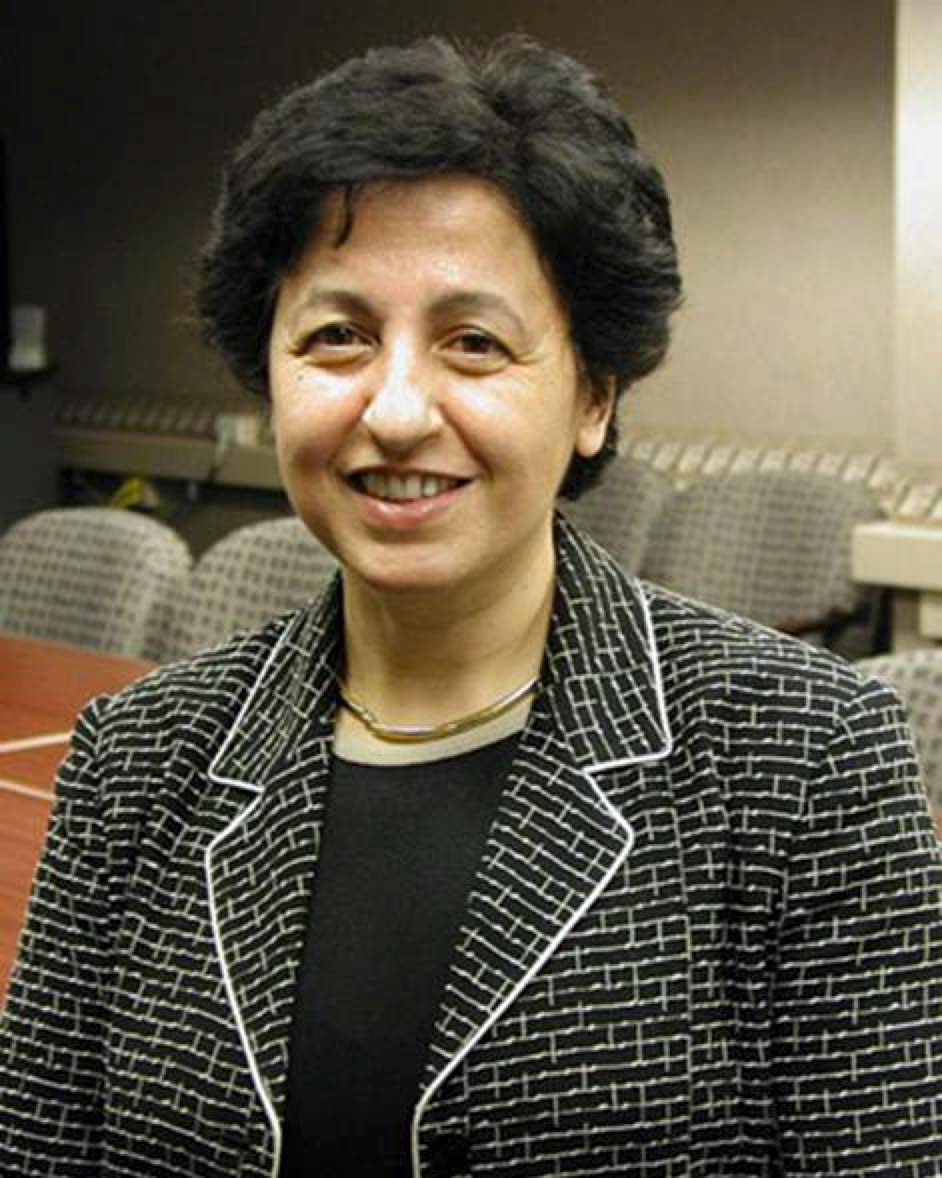
Elisa Bertino is the Distinguished Samuel Conte professor of Computer Science at Purdue University. She serves as Director of the Purdue Cyberspace Security Lab (Cyber2Slab). Prior to joining Purdue, she was a professor and department head at the Department of Computer Science and Communication of the University of Milan. She has been a visiting researcher at the IBM Research Laboratory in San Jose (now Almaden), at Rutgers University, at Telcordia Technologies. She has also held visiting professor positions at the Singapore National University and the Singapore Management University. Her recent research focuses on security and privacy of cellular networks and IoT systems, and on edge analytics for cybersecurity. Elisa Bertino is a Fellow member of ACM, IEEE, and AAAS. She received the 2002 IEEE Edward J. McCluskey Technical Achievement Award for “For outstanding contributions to database systems and database security and advanced data management systems”, the 2005 IEEE Computer Society Tsutomu Kanai Award for “Pioneering and innovative research contributions to secure distributed systems”, the 2019-2020 ACM Athena Lecturer Award, and the 2021 IEEE 2021 Innovation in Societal Infrastructure Award. She received an Honorary Doctorate from Aalborg University in 2021 and an Honorary Research Doctorate in Computer Science from the University of Salerno in 2023. She is currently serving as ACM Vice-president.
Title: Towards Efficient and Practical Privacy-Enhancing Solutions
Biography
Robert H. Deng is Professor of Computer Science, Deputy Dean for Faculty & Research, School of Computing and Information Systems, Singapore Management University (SMU). His research interests are in the areas of data security and privacy, network and distributed system security, and applied cryptography. He received the Outstanding University Researcher Award from National University of Singapore, Lee Kuan Yew Fellowship for Research Excellence from SMU, Asia-Pacific Information Security Leadership Achievements and Community Service Star from International Information Systems Security Certification Consortium (ISC2), and the Public Administration Medal (Silver) Singapore National Day Award. He is a Fellow of IEEE, Fellow of AAIA, and Fellow of Academy of Engineering Singapore.
Affiliation: Muroran Institute of Technology, Japan
Title: From Sound to Score: Pioneering AI in Automatic Music Transcription
Biography
Mianxiong Dong is the Vice President and Professor of Muroran Institute of Technology, Japan. His research interests include Wireless Networks, Cloud Computing, and Cyber-physical Systems. He has published over 480 academic papers, of which more than half are published in top journals such as IEEE JSAC, IEEE TIFS, IEEE TPDS, as well as top conferences including IEEE INFOCOM. A total of 7 papers have been selected as ESI Hot Papers (top 0.1%), and 33 papers have been selected as ESI Highly Cited Papers (top 1%). He serves as the Principal Investigator of more than ten research projects, including Japan Society for the Promotion of Science (JSPS) KAKENHI and KDDI Foundation, Program Officer (PO) of JST Support for Pioneering Research Initiated by the Next Generation (SPRING). He is the recipient of NISTEP Researcher 2018 (one of only 11 people in Japan) in recognition of significant contributions in science and technology, The Young Scientists’ Award from MEXT in 2021, SUEMATSU-Yasuharu Award from IEICE in 2021, IEEE TCSC Middle Career Award in 2021. He is Clarivate Analytics 2019, 2021, 2022, 2023 Highly Cited Researcher (Web of Science), Fellow of AAIA, Foreign Fellow of EAJ.
Title: Research and Writing: Why IACR Killed My Submission
Biography
Dr. Fuchun Guo is currently an Associate Professor at the School of Computing and Information Technology, University of Wollongong. He received his PhD degree from University of Wollongong Australia in 2013 supervised by Yi Mu and Willy Susilo. His primary research interests are security reduction and research philosophy in modern cryptography. He has published more than 130 research papers in many international journals and conferences, such as CRYPTO, EUROCRYPT, ASIACRYPT, CCS, IEEE TDSC. He authored an influential academic monograph titled Introduction to Security Reduction. He served as a member of the Program Committee for ASIACRYPT 2023, PKC 2025, etc. He is an ARC DECRA Fellow (2017-2019) and an ARC Future Fellow (2023-2026).
Title: Security and Privacy Protection for Large Language Models (LLMs)
Biography
Qian Wang is a full professor in School of Cyber Science and Engineering at Wuhan University, China.
He was selected into the National High-level Young Talents Program of China, and listed among the
World's Top 2% Scientists by Stanford University. He also received the National Science Fund for
Excellent Young Scholars of China in 2018. He has long been engaged in the research of cyberspace
security, with focus on AI security, data outsourcing security and privacy, wireless systems
security, and applied cryptography. He was a recipient of the 2018 IEEE TCSC Award for Excellence in
Scalable Computing (early career researcher) and the 2016 IEEE ComSoc Asia-Pacific Outstanding Young
Researcher Award. He has published 200+ papers, with 120+ publications in top-tier international
conferences, including USENIX NSDI, ACM CCS, USENIX Security, NDSS, ACM MobiCom, ICML, etc., with
20000+ Google Scholar citations. He is also a co-recipient of 8 Best Paper and Best Student Paper
Awards from prestigious conferences, including ICDCS, IEEE ICNP'11, etc. In 2021, his PhD student
was selected under Huawei's "Top Minds" Recruitment Program. He serves as Associate Editors for IEEE
Transactions on Dependable and Secure Computing (TDSC) and IEEE Transactions on Information
Forensics and Security (TIFS). He is a Fellow of the IEEE and a member of the ACM.
Affiliation: The Hong Kong Polytechnic University, Hong Kong, China
Title: From Randomized Response to Randomized Index: Analyzing Set-value Data with Local Differential Privacy
Biography
Qingqing Ye is an assistant professor in the Hong Kong Polytechnic University. She received her PhD degree from Renmin University of China in 2020. Her research interests include data privacy and security, and adversarial machine learning. She has published over 70 top-tier conference and journal papers (CCF-A) in related areas, including IEEE S&P, SIGMOD, VLDB, ICDE, INFOCOM, WWW, KDD, ICML, NuerIPS, TKDE, VLDBJ, TDSC, TIFS, TMC, etc. She is the recipient of several prestigious awards, including Hong Kong RGC Early Career Award, and IEEE S&P Travel Award. She serves as a TPC member and reviewer for top-tier conferences and journals, including VLDB, ICDE, WWW, SIGKDD, ICML, NeurIPS, TKDE, TDSC, TIFS, etc.
Moti Yung is a Distinguished Scientist with Google and an adjunct senior research faculty at Columbia University.
He got his PhD from Columbia University in 1988. Previously, he was with IBM Research, Certco, RSA Laboratories, and Snap.
Yung is a fellow of the IEEE, the ACM, the International Association for Cryptologic Research (IACR),
and the European Association for Theoretical Computer Science (EATCS).
Among his awards is the IEEE-CS Computer Pioneer Award. He is a fellow of the American Academy for Arts and Sciences.
Affiliation: City University of Macau, Macao, China
Title: LLM for Good and Bad: In the View of Cybersecurity
Biography
Tianqing Zhu is currently a professor, an Associate Dean (Research), with the faculty of data science, the City University of Macau. She holds BEng and MEng degrees from Wuhan University, Wuhan, China and a PhD in Computer Science from Deakin University, Australia (2014). Prior to that, she was a Professor at the China University of Geosciences (Wuhan), an Associate Professor with the School of Computer Science at the University of Technology Sydney, Australia, and a Lecturer with the School of Information Technology, Deakin University, from 2014 to 2018. She has served as associate editors for series of SCI journals, and PC chairs for series of International conferences, such as CCS 2025, IJCAI, AAAI, etc. She has published more than 300 papers and has supervised more than 30 PhD students. Her research interests include cybersecurity, privacy-preserving, and AI security.
Affiliation: Nanjing University of Aeronautics and Astronautics, China
Title: Towards Understanding and Enhancing Security of Proof-of-Training for DNN Model Ownership Verification
Biography
Chao Lin received his Ph.D. from the School of Cyber Science and Engineering at Wuhan University. He is currently a Research Professor with the College of Computer Science and Technology at Nanjing University of Aeronautics and Astronautics, China. His research interests mainly include Public-Key Cryptography, Blockchain, Payment Channels, and AI Security and Privacy. He has authored or co-authored more than 50 papers in leading conferences and journals, including CRYPTO, USENIX Security, ICML, IEEE ICDCS, IEEE TDSC, IEEE TIFS, and IEEE TSC. He was listed in Stanford University's 2022 and 2023 Global Top 2% Scientists. In addition to his research, he actively contributes to the academic community. He serves as an associate editor for journals such as IEEE TDSC, a Youth Editor for journals such as Research and Journal of CyberSecurity.
Title: Parallel Implementations of MSM: GPU and SIMD Based Approaches
Biography
Cong Peng received his Ph.D. from the School of Mathematics and Statistics, Wuhan University. He is currently a associate professor with the School of Cyber Science and Engineering, Wuhan University, China. His research interests mainly include public-key cryptography, post-quantum cryptography and cryptographic implementation. He has authored or co-authored more than 60 papers in leading conferences and journals, including Asiacrypt, PKC, CHES and IEEE TDSC/TC/TSC.
Dr.Yi Wang
Affiliation: National University of Defense Technology, China
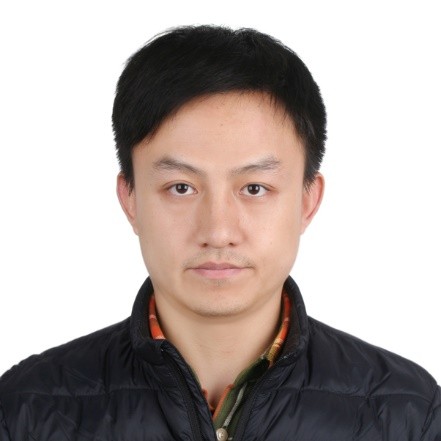
Yi Wang received the PhD degree from the National University of Defense Technology, China, in 2021. He is currently a research associate with the College of Computer Science and Technology, National University of Defense Technology, China. His research interests include public-key cryptography, information security and cyber security. He was awarded the Young Elite Scientists Sponsorship by China Association for Science and Technology, in 2023.
Title: Revisiting Adaptively Secure IBE from Lattices with Smaller Modulus: A Conceptually Simple Framework with Low Overhead
Biography
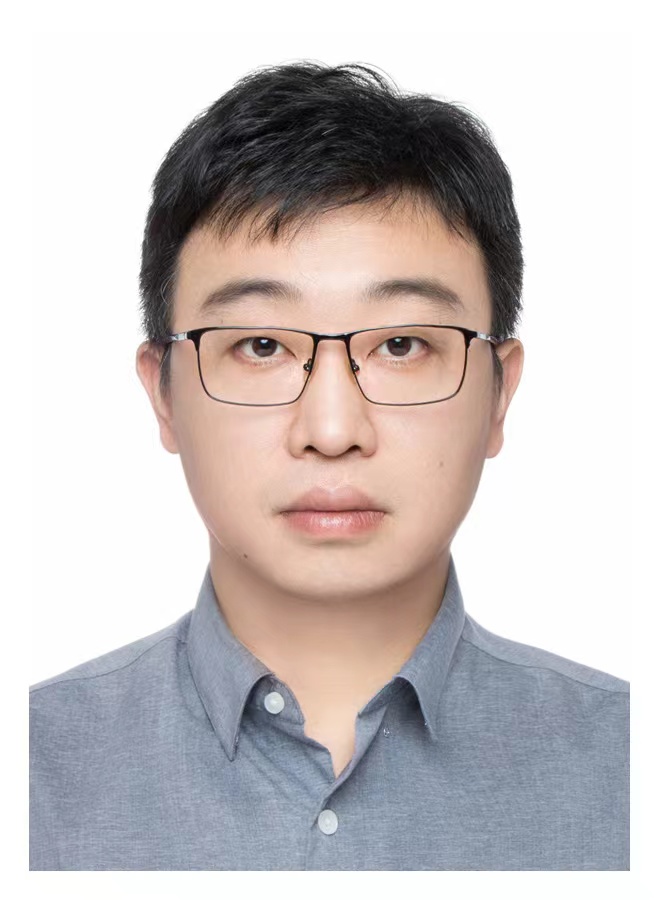
Zhedong Wang received his Ph.D in Engineering from the Institute of Information Engineering, Chinese Academy of Sciences. He is currently a Tenure-Track Assistant Professor at the School of Cyber Science and Engineering, Shanghai Jiao Tong University. His primary research interests include lattice-based cryptography and post-quantum cryptography. His representative work has been published in major cryptography conferences and journals, including Eurocrypt, Crypto, Asiacrypt, TCC, and PKC. He has been selected for prestigious programs such as the Young Talent Support Project of the Chinese Association for Cryptologic Research and the Shanghai Pujiang Talent Program.
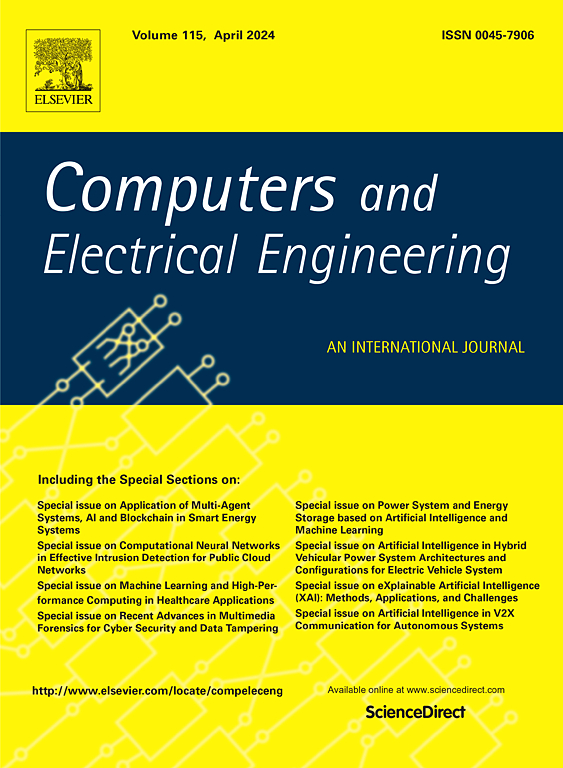
Journal Recommendations
Selected papers presented at the DSPP 2026 will be invited to consider submission (after
significant extension) for special issues or topical selections in the following journals:
More journal special issues or topical selections will be announced soon.
Conference Program
The detailed program of DSPP 2026 will be released closer to the conference date.
To Be Announced
Conference Proceedings
The conference proceedings of DSPP 2026 will be published by Springer. Links will be updated here after the conference.
To Be Announced
Presentation Instruction
Timing: a maximum of 20 minutes total, including speaking time and discussion.
You can use a USB flash drive (memory stick), but please make sure that your computer is scanned for viruses. Each presenter is required to meet with the session chair 10 minutes prior to the start of the session and copy the slide files (PPT or PDF) to their computer.
Please use commonly used fonts and symbols to ensure that your files are compatible and readable with our operating system. If you plan to use your own computer, please try to connect it and make sure it is working properly before your presentation.
Registration Information
There are two types of registration for DSPP 2026: Author and
Attendee.
At least one author for each accepted paper must complete an Author Registration before the registration due (September 15, 2026), in order for the paper to be included in the
conference proceedings.
Registration Type
Registration Fee
Author Registration
5000 CNY / 700 USD
Attendee Registration
2500 CNY / 350 USD
NOTE:
Each registration includes a conference kit, coffee breaks, lunches, a banquet dinner, and
access to all conference sessions.
Registration Method
To complete registration, please fill the following registration form and
send it with a scanned copy of the bank transfer transaction
receipt to dspp2026@163.com.
Nanjing University of Aeronautics and Astronautics
Bank Name
ICBC Nanjing Junguan Sub-branch
Account Number
4301017709001057206
CNAPS Code
102301000132
TRANSFER NOTE:
Please do include a note on the bank transfer in the following format:
DSPP-PaperID-Surname (for authors) or
DSPP-Givenname-Surname-Abbreviation_of_Affiliation (for attendees).
For instance, DSPP-142-Doe or DSPP-John-Doe-XDU.
Xingshuo Han, Nanjing University of Aeronautics and Astronautics, China
Guohua Tian, Xidian University, China
Tianwei Zhang, Nanyang Technological University, Singapore
General Chairs
Xiaofeng Chen, Xidian University, China
Shengjun Huang, Nanjing University of Aeronautics and Astronautics, China
Man Ho Allen Au, The Hong Kong Polytechnic University, China
Steering Committee
Xiaofeng Chen, Xidian University, China
Xinyi Huang, Nanjing University of Aeronautics and Astronautics, China
Yang Xiang, Swinburne University of Technology, Australia
Organizing Chairs
Youwen Zhu, Nanjing University of Aeronautics and Astronautics, China
Rui Zhang, Nanjing University of Aeronautics and Astronautics, China
Xinlei He, Wuhan University, China
Qiao Xue, Nanjing University of Aeronautics and Astronautics, China
Shaofeng Li, Southeast University, China
Kangjie Chen, Tianjin University, China
Program Committee
Siyuan Li, Shandong University, China
Ruigang Liang, Institute of Information Engineering, Chinese Academy of Sciences, China
Peizhuo Lv, Nanyang Technological University, Singapore
Xiaoguo Li, Chongqing University, China
Zhiyuan Jiang, National University of Defense Technology, China
Xiangfu Song, Nanyang Technological University, Singapore
Xingkong Ma, National University of Defense Technology, China
Leqian Zheng, City University of Hong Kong, China
Lin Liu, National University of Defense Technology, China
Jiangyong Shi, National University of Defense Technology, China
Yi Wang, National University of Defense Technology, China
Min Zhang, Institute of Software, Chinese Academy of Sciences, China
Contact
For all questions about submittion, registration, venue, visa, and hotel reservation, please contact dspp2026@163.com.
Please note that the conference hotel or the conference secretary will not contact any attendee about reservations, so please be cautious when you are asked to provide credit card and identification information in order to reserve a room for you. If you have any questions, please contact us at the conference e-mail address.
Conference Venue
DSPP 2026 will be held at
丽湖雅致酒店 (Lihu Yazhi Hotel), Nanjing.
The conference is organized by the College of Computer Science and Technology, Nanjing University of Aeronautics and Astronautics (南京航空航天大学计算机科学与技术学院). Lihu Yazhi Hotel is located in Jiangning District, Nanjing, on the scenic shores of Baijiahu Lake. The hotel offers a pleasant lakeside environment, providing an ideal setting for academic exchange and collaboration.